Le Monde
flottant.
« Ukiyo », the floating world: originally a Buddhist term for the vanity of things, turned by merchant Edo into a praise of the moment, of pleasure, of the passing present. The print is its democratic art, pulled in thousands of impressions, sold for the price of a bowl of noodles.
This exhibition brings together three ways of inhabiting that world. Hokusai seeks the structure of the visible, the wave as a mountain, the Fuji as a fixed point. Hiroshige catches its atmosphere, rain, snow, the evening mist. Utamaro probes its faces, and turns the portrait of women into an inner landscape.
Seven sheets, much space. The hang follows the ma, the interval, that active emptiness which separates and binds. One sees here how Prussian blue, imported from the West around 1830, first cooled then electrified the palette of the late print.
You come here to look slowly. The world floats, but you must stop to see it.
Works on view
-
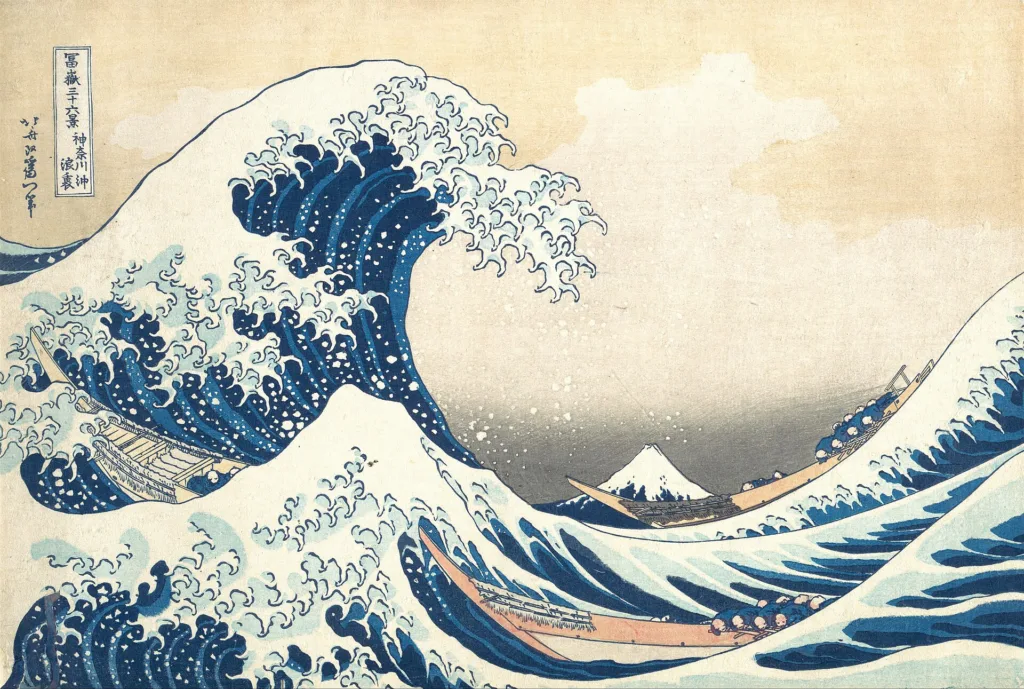 Katsushika HokusaiLa Grande Vague de Kanagawa, vers 1831Woodblock print (nishiki-e)
 -
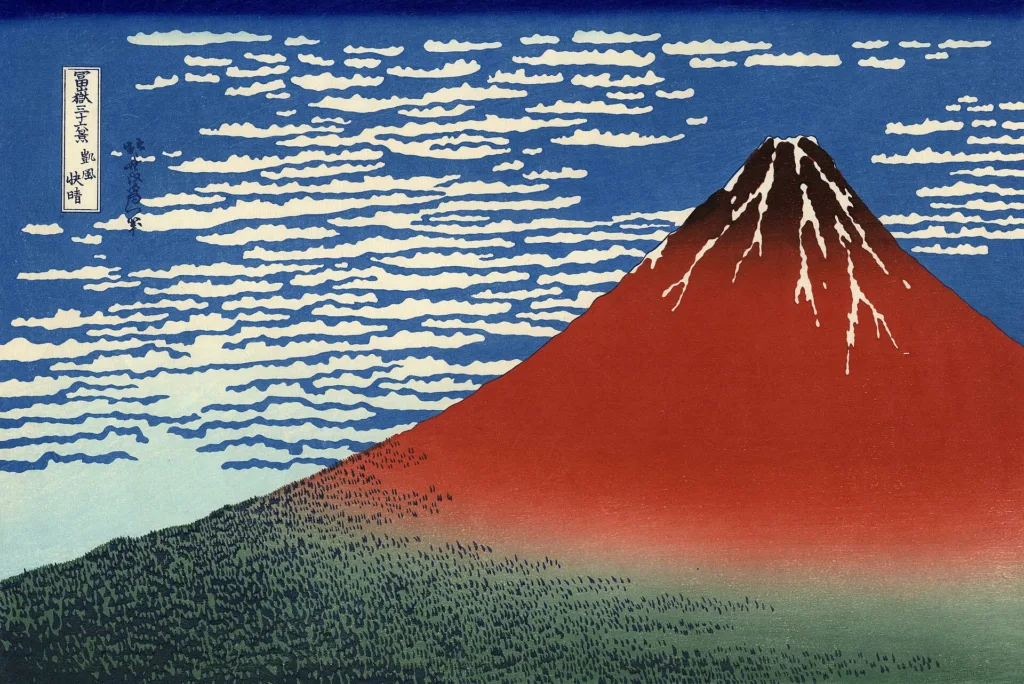 Katsushika HokusaiFuji par temps clair, vers 1831Woodblock print (nishiki-e)
 -
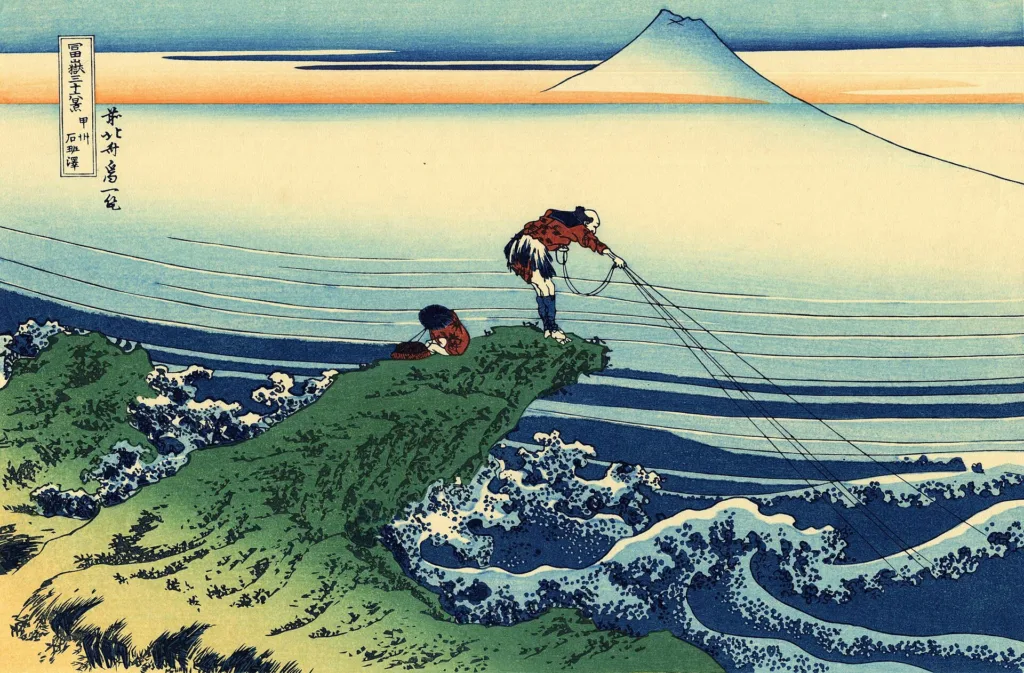 Katsushika HokusaiKajikazawa, province de Kai, vers 1830Woodblock print (nishiki-e)
 -
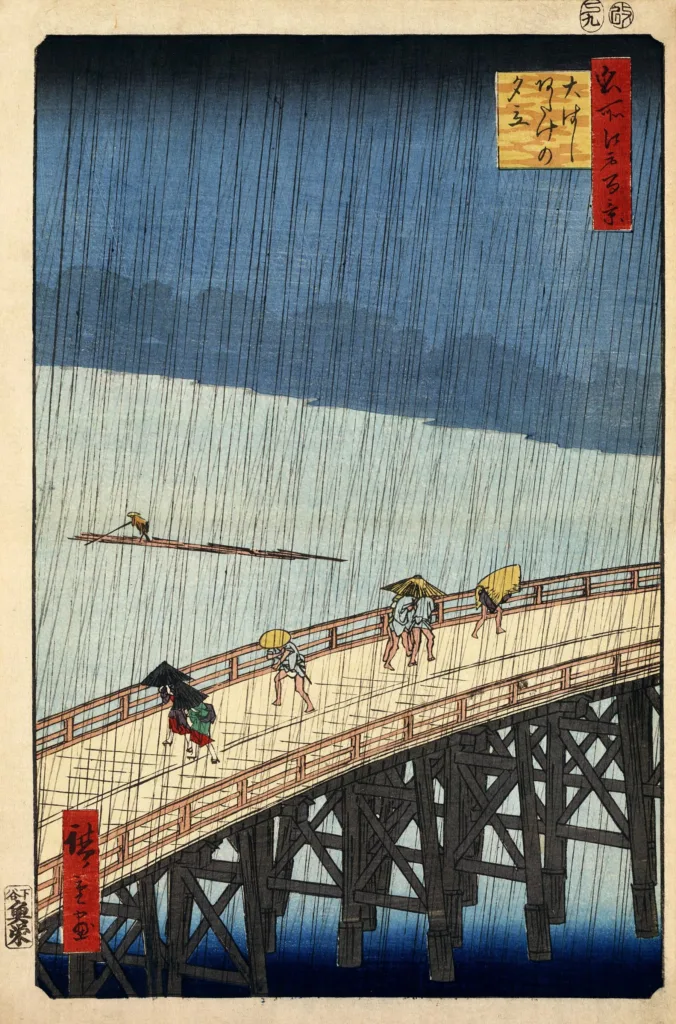 Utagawa HiroshigeAverse soudaine sur le pont d'Atake, 1857Woodblock print (nishiki-e)
 -
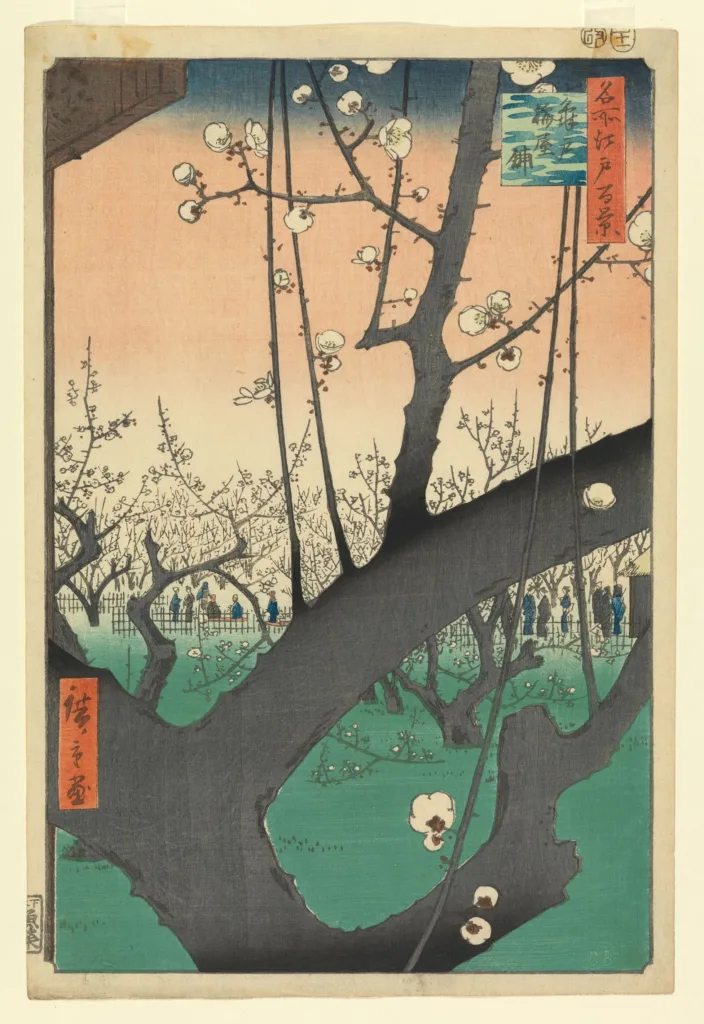 Utagawa HiroshigeLe Jardin de pruniers de Kameido, 1857Woodblock print (nishiki-e)
 -
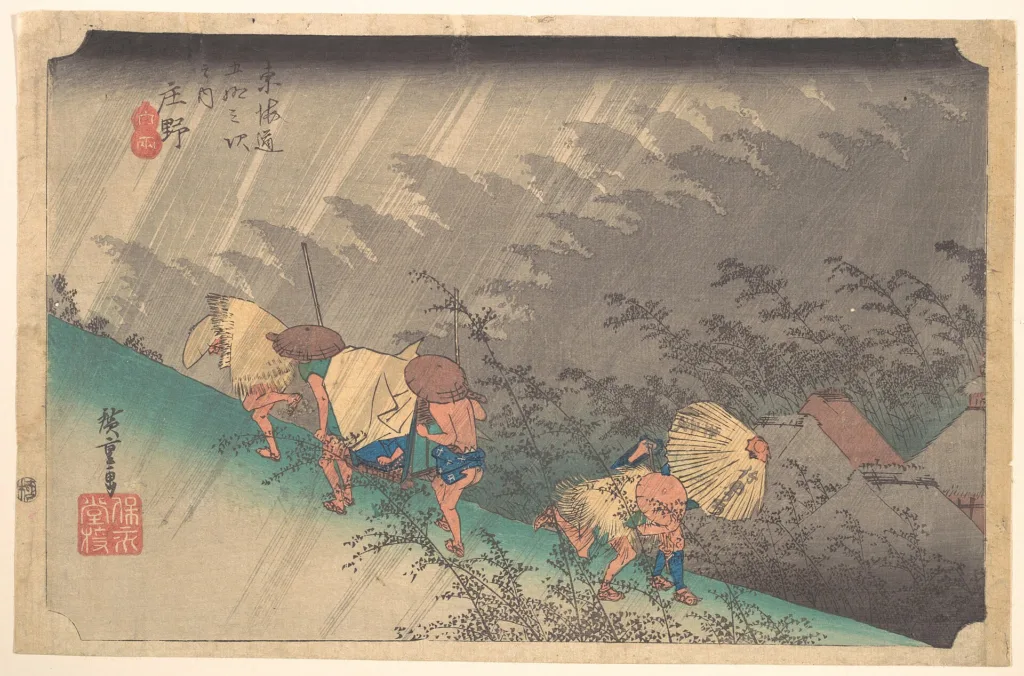 Utagawa HiroshigeShōno, l'averse blanche, vers 1833Woodblock print (nishiki-e)
 -
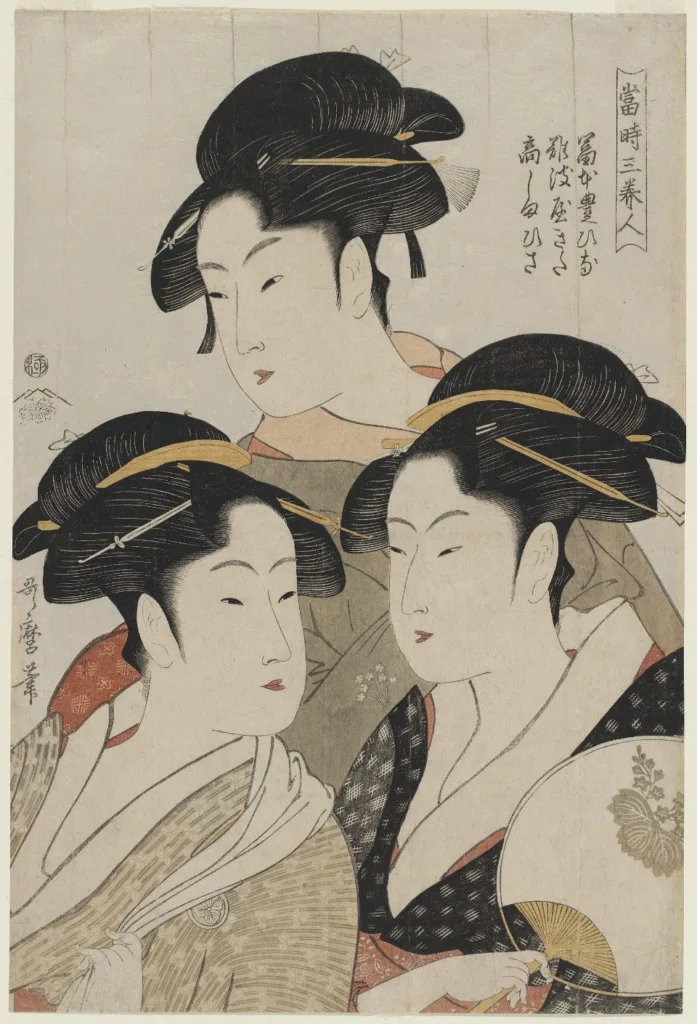 Kitagawa UtamaroTrois beautés de notre temps, vers 1793Woodblock print (nishiki-e)
Public domain reproductions, via Wikimedia Commons (MET, MFA Boston, Chester Beatty, Rijksmuseum).